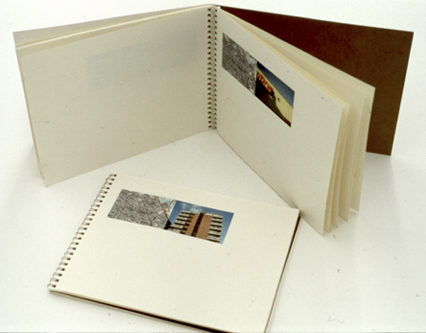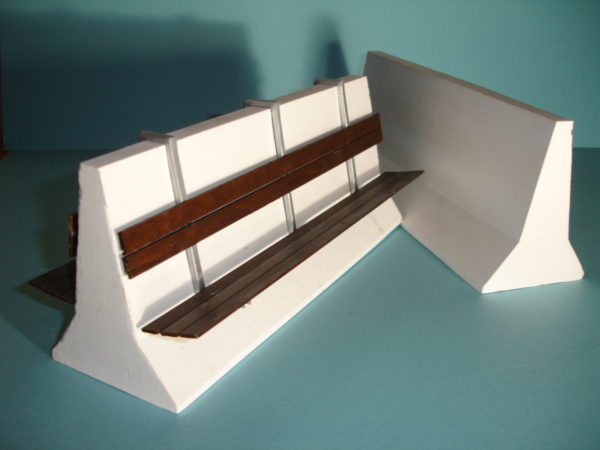
Design concept for Jersey barrier bench attachment. Plaster, wood and metal, 10″L x 2″W x 3″H, set of 2
Jersey barriers were originally developed to divide multi-lane highways in New Jersey. These barriers were intended to minimise damage to vehicles and to prevent them from veering into oncoming traffic and causing fatal, head-on collisions. Today, the barriers, which are also known as K-rails, have evolved in both form and function, but the original Jersey barrier design and use are still in high demand. The barriers are used on construction sites to block off restricted areas, and more recently, to create a safe distance between surface streets and vehicles and sensitive sites and monuments. Because government buildings and historic monuments are now protected in this way, the barriers which restrict vehicle intrusion also render these important civic places unattractive and unfriendly for pedestrians. As what started as a temporary safety measure becomes increasingly more permanent, widespread, and unavoidable, a new way to reinterpret these barriers for the benefit of the pedestrian population has become critical.

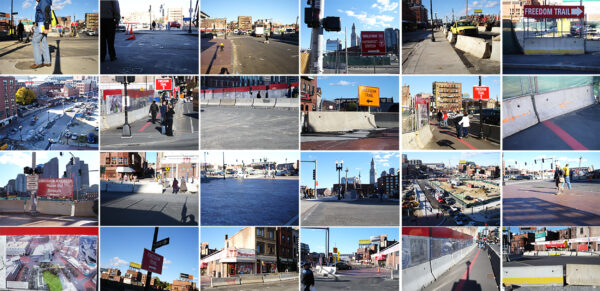
Photo collage showing existing conditions of the future North End Park/Freedom Trail.
This project is funded by the LEF Foundation‘s Public Art, Architecture and Design Grant. Many thanks to the Artists Foundation for sponsorship and support.